Stovetop percolators have made a real comeback among coffee drinkers who want bold, full-bodied brew without paying for a pod machine or expensive espresso setup. The method is simple: water cycles up through a tube, drips over ground coffee in a basket, and repeats until you pull it off the heat. Done right, you get a rich cup with more character than a standard drip machine can produce. The trick is finding a percolator built well enough to handle the daily grind without leaking, warping, or turning your coffee bitter. We looked at the five most-reviewed and highest-rated options available in 2026, weighing review volume, star ratings of 3.8 and above, material quality, and price. Whether you brew for one on a camping trip or make a full pot every morning at home, there is a clear best pick for each situation.
Short answer: The Presto 02811 (B00006IV0Q, $76.82) is the best stovetop percolator for most people, with over 19,000 reviews and a 4.5-star rating that is nearly unmatched in this category. Budget shoppers who still want solid stainless steel construction should look at the Medelco 8541895214 (B00GRTZA6C, $22.99), which earns 4.5 stars at a fraction of the cost. For a portable camping-capable option, the Texsport 13215 (B000P9GZNM, $41.99) is lightweight, manual, and built to last outdoors.
The Presto 02811 is the most reviewed stovetop percolator on the market, with over 19,000 verified buyer ratings averaging 4.5 stars. It holds 12 cups, brews at 800 watts, and includes an automatic keep-warm thermostat that prevents the bitter over-extraction that plagues manual percolators. The stainless steel body is dishwasher safe and the fit and finish are noticeably better than similarly priced competitors.
Best for: Home use, daily brewing, families, and anyone who wants a set-and-forget percolator without the guesswork.
Pros
Over 19,000 reviews with a sustained 4.5-star average
Automatic thermostat stops brewing at the right temperature
Dishwasher safe, including the basket and stem
12-cup capacity suits families and entertaining
Stainless steel construction is durable and taste-neutral
Cons
At $76.82 it costs more than most manual stainless options
Requires a 120-volt outlet, so it is not useful for camping
Bottom line: No other stovetop percolator in 2026 has the combination of review volume, average rating, and automatic safety that the Presto 02811 delivers. It is the clear best-overall pick.
The Mixpresso EPRED-4MIX is a standout option for buyers who want something that looks different on the stovetop. The red matte finish is bold and distinctive, and with over 5,500 reviews at a 4.0-star average it has enough real-world feedback to trust. It operates manually and runs at 800 watts, making it a practical choice for compact kitchens.
Best for: Style-conscious buyers who want a percolator that looks as good as it brews and are willing to manage the heat manually.
The Texsport 13215 is built for outdoor use. At 1.8 pounds it is one of the lightest stainless percolators in the category, and the manual operation means it works on any heat source from a propane camp stove to an open fire grate. The 9-cup capacity is generous for a camp pot, and the reusable basket means no paper filters to pack.
Best for: Campers, hikers, and anyone who wants a coffee maker that works reliably away from an electrical outlet.
Pros
Lightweight at 1.8 pounds, easy to pack for camping or backpacking base camps
Works on gas, electric, camp stoves, and open flame without modification
9-cup capacity serves a group without needing multiple brews
Reusable basket cuts the need for disposable supplies in the field
Stainless steel finish is stain and corrosion resistant
Cons
Manual operation requires attention to heat level to avoid bitter over-extraction
Dishwasher compatibility is not confirmed, so plan on hand-washing
Bottom line: For outdoor brewing, the Texsport 13215 is the most practical and durable stainless option in this price range.
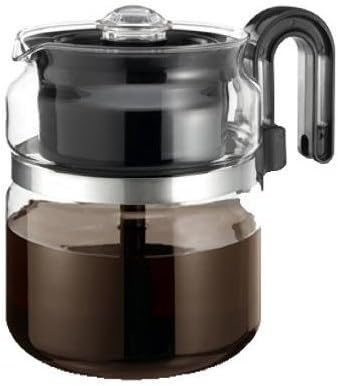
At $22.99 the Medelco 8541895214 is by far the least expensive percolator on this list, yet it holds a 4.5-star average from 242 verified buyers. The 8-cup capacity suits solo drinkers and small households, and at 1.58 pounds it is also one of the lightest options available. It is dishwasher safe, which is a rare convenience at this price.
Best for: Solo drinkers, apartment kitchens, and budget shoppers who want a real percolator without spending more than $25.
Pros
Lowest price in the category at $22.99 with a 4.5-star average
Dishwasher safe for easy daily cleanup
Lightest percolator in this roundup at 1.58 pounds
8-cup capacity is right-sized for one or two regular drinkers
Cons
Plastic PP filter material is less durable than metal mesh filters
Smaller review base of 242 compared to the top two picks
8-cup limit is not enough for larger households or entertaining
Bottom line: The Medelco 8541895214 punches well above its price with a 4.5-star rating and dishwasher-safe convenience that most competitors charge twice as much to match.
The Farberware COMINHKR028441 is the highest-priced percolator in this roundup at $91.46, and it earns the premium with a 12-cup stainless steel build, touchscreen controls, and a 1,000-watt element that heats faster than most competitors. The 4.4-star average from 300 buyers confirms that the performance justifies the price for the right buyer.
Best for: Buyers who want the best-looking and most feature-forward percolator available and are comfortable with premium pricing.
Pros
Touchscreen controls offer a more refined operating experience
1,000-watt element heats water faster than lower-wattage models
12-cup capacity handles large households and entertaining
4.4-star average from 300 verified buyers
Cons
Not dishwasher safe, which is a notable gap at this price
At $91.46 it costs more than the Presto 02811 for a smaller review base
Touchscreen controls add complexity that manual users do not need
Bottom line: The Farberware COMINHKR028441 is a well-built premium percolator for buyers who want modern controls and fast heat. The lack of dishwasher safety is the one area where it falls short of its price expectations.
Stovetop percolators are sold primarily in cup sizes ranging from 4 cups up to 12 cups, though actual cup size in percolator terms is closer to 5 ounces than the standard 8 ounces most people expect. A 9-cup percolator is a practical size for two or three daily drinkers. If you regularly entertain or brew for a full family at breakfast, a 12-cup model like the Presto 02811 or Farberware COMINHKR028441 is worth the larger footprint. Solo drinkers and campers tend to do well with an 8-cup or smaller unit because it heats faster and wastes less coffee. Overfilling a percolator past its fill line forces the water to cycle too quickly, which leads to weak and under-extracted coffee regardless of how good your grounds are. Under-filling by more than a cup or two is also a problem because the basket sits too far above the water and the cycle never completes properly.
Material: Stainless Steel vs. Glass vs. Aluminum
Almost every modern percolator worth buying is made from stainless steel, which holds heat well, does not impart off-flavors, and resists corrosion from acidic coffee over time. Aluminum percolators are cheaper to produce and found mostly in very old or very budget-oriented models, but aluminum can react with acidic brew and leave a faint metallic taste after years of use. Glass-sided percolators let you watch the brew cycle, which is satisfying and useful for judging color, but the glass knob or side panels are fragile and often the first thing to break. For a percolator you plan to use every day, full stainless steel construction is the most practical and longest-lasting choice. Models like the Presto 02811 and Texsport 13215 are stainless throughout, which means they can also handle gas, electric, and induction cooktops without issues.
Heat Source Compatibility: Gas, Electric, Induction, and Camp Stoves
Not every percolator works on every heat source, and this matters more than most buyers realize before purchasing. Stainless steel percolators with a flat, solid base will work on gas, electric coil, and glass-top electric stoves without modification. Induction cooktops require a magnetic-base pot, and not all stainless percolators are induction-compatible, so you need to check the product specs if induction is your primary cooktop. Campers who use propane or butane burners or an open campfire do best with a lightweight stainless model like the Texsport 13215, which is designed to handle uneven heat distribution and the rougher conditions of outdoor cooking. Percolators with plastic bases or plastic handles close to the heat zone are a poor fit for high-flame camp stoves. If you split time between a home kitchen and camping, pick one percolator that handles both rather than buying two separate units.
Brew Control: How to Avoid Bitter Coffee
The biggest complaint about percolator coffee is that it gets bitter, and in almost every case the cause is over-percolation, not the method itself. Once water reaches about 200 degrees Fahrenheit and the percolating bubble cycle becomes rapid and aggressive, your coffee crosses from bold into harsh within a minute or two. The fix is to watch the bubble rate through the lid knob or glass dome and pull the pot off the heat or drop it to its lowest setting as soon as percolation becomes steady and moderately paced, typically 7 to 10 minutes for a full pot. Automatic percolators like the Presto 02811 include a built-in thermostat that cuts the element before over-extraction happens, which is one reason that model has so many satisfied buyers. Grind size also matters: a coarser grind than you would use for drip coffee is the standard recommendation because fine grounds pass through the basket perforations and add sediment and bitterness to the cup.
Cleaning and Long-Term Maintenance
A percolator that is hard to clean will eventually produce coffee that tastes stale or off, because old coffee oils build up in the tube, basket, and inner walls faster than most people expect. Look for a model where the stem, basket, and basket cover separate completely from the pot body so every piece can be washed individually. Dishwasher-safe units save time but need the basket and stem secured in the top rack to avoid getting knocked around. The Presto 02811 is rated dishwasher safe, which is a meaningful convenience advantage for a daily-use percolator. For models that are hand-wash only, a bottle brush long enough to reach inside the stem is essential, and a monthly soak with a mix of water and white vinegar removes mineral deposits that cause the basket to clog and the brew to slow down over time.
Common mistakes to avoid
Using too fine a grind, which forces particles through the basket screen and produces muddy, bitter coffee with visible sediment in the cup.
Leaving the percolator on the heat too long after percolation starts, which re-cycles already-extracted coffee through the grounds and turns the brew harsh.
Overfilling past the max fill line, which speeds up the cycle to the point where water does not have time to extract flavor properly.
Not pre-washing a new percolator before first use, which can leave manufacturing residue that taints the first few pots.
Using cold water from the tap when starting the brew, which extends the time to first percolation and can cause uneven extraction in the lower part of the basket.
Skipping the monthly descaling rinse, which lets mineral scale clog the stem tube and reduce water flow to the point where the percolator stops cycling entirely.
Frequently asked questions
Is percolator coffee stronger than drip coffee?
Percolator coffee is generally bolder and more robust than standard drip coffee because the water cycles through the grounds more than once during the brew. The exact strength depends on how long you percolate and how much coffee you add to the basket, so you have more hands-on control than with most automatic drip machines. Many people who switch to a percolator find they use slightly less ground coffee per pot than they did before because the extraction is more efficient. If you prefer a milder cup, reduce your percolation time by a minute or two rather than cutting the coffee dose drastically.
Can I use a stovetop percolator on an induction cooktop?
Only if the percolator has a magnetic stainless steel base that an induction element can couple with. Many stainless percolators on the market are induction compatible, but you should verify in the product specs before buying because some use a non-magnetic steel alloy or have a base construction that fails the induction magnet test. A simple check is to hold a refrigerator magnet firmly to the bottom of the pot: if it sticks, the cooktop will recognize it. Models with aluminum cores or fully aluminum bases will not work on induction at all.
How much coffee should I put in a stovetop percolator?
A starting point is one tablespoon of coarsely ground coffee per percolator cup, which is roughly 5 ounces of water. That ratio produces a medium-strength brew that most drinkers enjoy. If you want a stronger pot, add another tablespoon or two to the basket rather than extending the percolation time, because longer percolation adds bitterness before it adds strength. Do not fill the basket past its capacity line, which most manufacturers mark with a ridge or stamped indicator inside the basket, because an overfilled basket restricts water flow through the grounds.
How do I know when the percolator is done brewing?
Watch the color of the liquid visible through the glass knob or dome on the lid: when it shifts from light gold to a deep amber-brown that matches the color of finished coffee, your brew is ready. If you do not have a clear knob, you can time it at about 7 to 10 minutes after the first steady percolation bubble appears for a full pot. Many experienced percolator users also listen for the sound to slow from rapid spurting to a slower, more rhythmic pop, which indicates the cycle is completing at a lower temperature. Pull the pot off high heat at that point and serve right away for the best flavor.
Are stovetop percolators good for camping?
Yes, and they are one of the most practical ways to make real coffee in the field because they require no electricity, no paper filters, and no pods. A lightweight stainless model like the Texsport 13215 weighs under 2 pounds and sits flat on a propane burner, camp stove, or fire grate without any adapters. The reusable basket means you only need to pack ground coffee, which is easier to transport than pods and cheaper per cup than most other camp coffee options. Just pack a long-handled spoon to lift the basket out when the brew is done so you do not burn your fingers.
What is the difference between a stovetop and an electric percolator?
A stovetop percolator uses your existing burner as the heat source, which gives you more control over the brew temperature but requires you to stay nearby and monitor it. An electric percolator has a built-in heating element with a thermostat that cuts out automatically when the brew reaches the right temperature, similar to how an automatic drip machine works. Stovetop models tend to be lighter, cheaper, and more versatile across heat sources including camp stoves and open flames. Electric percolators are more convenient for daily kitchen use because you set them and walk away, though they are not portable for outdoor brewing.
Final recommendation
The Presto 02811 is the right choice for the vast majority of buyers: nearly 20,000 real customer reviews, a 4.5-star average, and an automatic thermostat that prevents the over-percolation mistake that gives this brewing method a bad reputation. If budget is the priority, the Medelco 8541895214 at $22.99 delivers a 4.5-star experience at a price most people can replace without guilt. Campers and outdoor cooks should look at the Texsport 13215, which is built for rough conditions and weighs well under 2 pounds. Whatever you pick, use a coarse grind, watch your heat, and pull the pot at the right moment, and stovetop percolator coffee will consistently outperform what a basic drip machine can produce. Questions? Reach us at [email protected].
We use necessary cookies to keep the site working. With your permission, we also use functional, analytics, and marketing cookies. Read our Cookie Policy.
 Best Overall Presto 02811 Stovetop Percolator
$76.82
Best Overall Presto 02811 Stovetop Percolator
$76.82
 Best for Style Mixpresso EPRED-4MIX Stovetop Percolator
$49.99
Best for Style Mixpresso EPRED-4MIX Stovetop Percolator
$49.99
 Best for Camping Texsport 13215 Stovetop Percolator
$41.99
Best for Camping Texsport 13215 Stovetop Percolator
$41.99
 Best Value Medelco 8541895214 Stovetop Percolator
$22.99
Best Value Medelco 8541895214 Stovetop Percolator
$22.99
 Best Premium Pick Farberware COMINHKR028441 Stovetop Percolator
$91.46
Best Premium Pick Farberware COMINHKR028441 Stovetop Percolator
$91.46