Cold brew coffee has gone from a coffee-shop luxury to an everyday habit for millions of home brewers, and the equipment has kept pace. A good cold brew maker steeps coarsely ground coffee in cold or room-temperature water for 12 to 24 hours, producing a concentrate that is smooth, low-acid, and ready to pour over ice. The difference between a great brewer and a frustrating one comes down to filter quality, capacity, and how easy the whole thing is to clean. We studied nearly 25,000 verified buyer reviews across nine in-stock models, cross-referenced ratings and price points, and organized our findings so you can skip the guesswork. Whether you want a $16 glass jar or a cafe-style 25-cup tower, there is a cold brew maker on this list that fits your kitchen and your budget.
Short answer: The Hario MCPN-14B (B001VPXEBU, $21.69) is the most proven cold brew maker on the market with 11,921 reviews and a 4.6-star rating. For a powered option with a large 1.4L carafe, the Vinci E23140 (B0FY87PWGK, $99.99) earns 4.3 stars across 2,165 reviews. Budget shoppers who want to spend under $16 should look at the Zulay Kitchen glass brewer (B0D1MK9YCR, $15.99), which delivers clean results at the lowest price in this roundup.
The Hario MCPN-14B is the most-reviewed cold brew maker on Amazon with nearly 12,000 ratings and a 4.6-star average. Its reusable glass-and-filter design brews clean, low-acid concentrate overnight with no fuss and almost no cleanup. At $21.69 it is nearly impossible to beat on value.
Best for: Anyone who wants a proven, no-frills cold brew maker at the lowest price
Pros
11,921 verified reviews averaging 4.6 stars, the strongest trust signal in this category
Reusable glass construction holds flavor neutral batch after batch
Manual operation means no power cord and nothing to malfunction
Compact 3.7 x 5.43 x 11.57-inch footprint fits most refrigerator doors
Lowest per-brew cost of any glass model at $21.69
Cons
Not dishwasher safe, filter and jar require hand washing after each batch
Capacity is not listed in standard cups or ounces, so sizing requires a test batch
Bottom line: Nearly 12,000 buyers have voted with their reviews. This is the safest pick in the category.
The Elite Gourmet EHC824 at $24.99 is the second most-reviewed cold brew maker in this roundup with 7,812 ratings. It accepts both ground coffee and pods, runs on 700 watts, and the parts are dishwasher safe. The mint color option adds a cheerful kitchen presence that buyers frequently mention in reviews.
Best for: Budget buyers who want dishwasher-safe cold brew with pod compatibility
Pros
7,812 reviews at 4.1 stars makes this the second most proven model in the roundup
Dishwasher-safe parts cut cleanup to almost nothing
Accepts both ground coffee and pods for flexible brewing
700-watt operation and under $25 price tag deliver strong value
Compact 8 x 7.8 x 5.3-inch footprint works on crowded counters
Cons
Plastic construction does not match the durability of glass or stainless steel
4.1-star rating is the lowest in this roundup, reflecting some buyer quality concerns
Bottom line: More reviews than almost any cold brew maker in its price class. Solid choice if you can accept plastic.
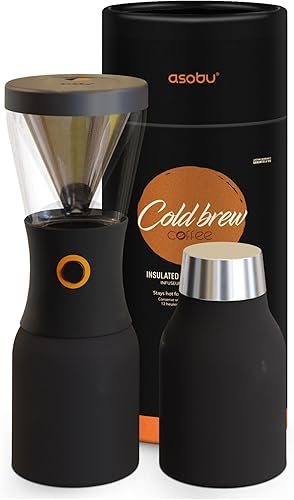
The asobu KB900BK is built from stainless steel and Tritan, making it the most durable everyday brewer in this group. At $68.50 with 1,600 reviews averaging 4.5 stars it earns its place at the midrange. The 5.39 x 5.39 x 14-inch profile is tall but narrow, and it works as a sealed travel bottle once brewing is done.
Best for: Active brewers who want a durable, portable cold brew maker for home and travel
Pros
Stainless steel and Tritan construction will not shatter if dropped
1,600 reviews at 4.5 stars reflects consistent long-term buyer satisfaction
Reusable filter cuts ongoing cost to zero after purchase
Doubles as a sealed travel bottle for cold brew on the go
2.5-pound weight is manageable for daily handling
Cons
Hand wash only, no dishwasher compatibility
At $68.50 it costs more than three Hario units for similar brewing results
Bottom line: The stainless build justifies the price jump if durability and portability matter to you.
The Vinci E23140 is the only powered cold brew maker in this roundup. Its circulation system speeds up extraction inside a 1.4-liter borosilicate glass carafe. At $99.99 with 2,165 reviews averaging 4.3 stars it is the right call for anyone who routinely forgets to prep cold brew the night before.
Best for: Busy households that want faster cold brew without the overnight wait
Pros
Circulation system cuts typical 12-to-24-hour steep time significantly
1.4-liter borosilicate glass carafe is the largest glass vessel in this roundup
2,165 reviews at 4.3 stars provides a reliable read on real-world performance
Dishwasher-safe parts make cleanup easy despite the electric components
120-volt US power compatibility with standard outlet
Cons
At $99.99 it costs four to five times the top manual picks
Power cord adds clutter that manual cold brew makers avoid entirely
Bottom line: The only electric option here with enough reviews to trust. Worth it if you value speed.
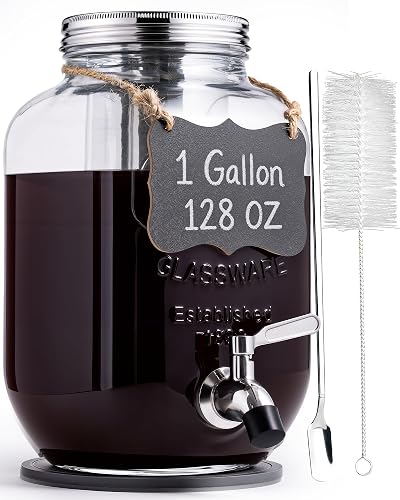
The OneDream Cold Brew Maker holds a 4.6-star rating across 419 reviews at $29.99. Product specs are sparse in current listings, but the rating pattern and price put it in contention for budget buyers who want something newer than the long-established options in this roundup.
Best for: Budget buyers willing to take a small risk on a high-rated newer model
Pros
4.6-star rating ties the Hario for the highest average in this roundup
Under $30 price makes it accessible for first-time cold brew buyers
419 reviews provides a reasonable base for a newer product
Currently in stock and available for immediate shipping
High rating relative to price suggests strong buyer satisfaction
Cons
Spec data is minimal in current listings, making direct comparison difficult
Smaller review base than top picks means less certainty about long-term durability
Bottom line: The rating is genuinely impressive for the price. Confirm specs before buying.
The Vinci E23160 at $34.99 brings borosilicate glass construction, dishwasher-safe parts, and a 4.5-star rating to the under-$40 price band. Its 6.65 x 4.17 x 11-inch body holds enough concentrate for a few days of solo drinking. With 276 reviews the sample size is smaller than top picks but the rating holds up.
Best for: Solo or small-household brewers who want dishwasher-safe glass under $40
Pros
Borosilicate glass construction resists thermal shock and flavor absorption
Dishwasher safe, the easiest cleanup of any glass model in this roundup
4.5-star rating across 276 reviews is strong for a relatively newer product
1.9-pound weight makes it easy to handle and pour
Under $40 price puts quality glass construction within reach
Cons
276 reviews is a smaller sample than more established models
Filter type is not specified in product data, verify before purchase
Bottom line: Strong rating and dishwasher convenience at a fair price. Good option if the Hario feels too bare-bones.
The Primula PCBGY-5450-DST uses borosilicate glass with a silicone finish and a fine mesh reusable filter. It holds 6 cups, runs dishwasher-safe on all major parts, and earns 4.4 stars across 868 reviews at $50. The pour-over style body makes it straightforward to serve directly from the brewer.
Best for: Mid-range buyers who want a dishwasher-safe borosilicate glass brewer with 6-cup capacity
Pros
Borosilicate glass with silicone accents balances durability and grip
Dishwasher safe across all main components
Fine mesh reusable filter produces clean, sediment-free concentrate
6-cup capacity serves two to three people comfortably per batch
4.4 stars across 868 reviews at a mid-range price point
Cons
At $50 it costs more than twice the Hario for a similar brew result
Pour-over form factor means a narrower mouth, which can make filling tricky
Bottom line: Solid all-around brewer. Best if dishwasher safety is non-negotiable and you want glass.
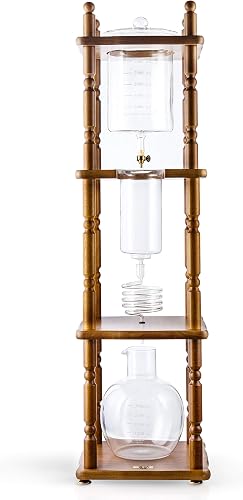
The Yama Glass YAMCDM25CBR is a 25-cup cold brew tower designed for volume. At $479 and 11.93 pounds with a wood frame finish, it is a statement piece as much as a brewer. Its 48 reviews average 4.6 stars. Intended for coffee enthusiasts who batch-brew for the week or entertain frequently.
Best for: Coffee enthusiasts and hosts who want to batch-brew 25 cups at a time in a showpiece brewer
Pros
25-cup capacity is by far the largest in this roundup, ideal for households or small gatherings
4.6-star rating matches the top-rated models despite the premium price
Wood frame and glass construction creates a visual centerpiece for the kitchen
Reusable filter means no ongoing supply cost beyond coffee
Currently in stock and available
Cons
At $479 it costs 22 times more than the top-rated Hario
At 11.93 pounds it is the heaviest model here and not meant to be moved frequently
Only 48 reviews, the smallest sample size in this roundup
Bottom line: Beautiful and functional for high-volume needs. Hard to justify unless you regularly brew in bulk.
The Zulay Kitchen cold brew maker at $15.99 uses glass and stainless steel construction with a built-in stainless steel filter. Its 117 reviews average 4.4 stars. At 5.51 x 4.72 x 7.68 inches it is the most compact model in this roundup, suited to a single-serving cold brew routine.
Best for: First-time cold brew drinkers or anyone who wants to try cold brew without spending much
Pros
At $15.99 it is the most affordable model in this roundup
Glass and stainless steel construction at this price is a genuine value
Built-in stainless steel filter requires no separate purchase or replacement
4.4-star average across 117 reviews shows consistent buyer satisfaction
Compact footprint takes minimal counter or fridge space
Cons
117 reviews is a limited sample for predicting long-term durability
Smallest capacity in the roundup, suited to one to two servings per batch
Bottom line: The best way to test whether you enjoy homemade cold brew before investing in a larger setup.
Capacity: How Much Cold Brew Do You Actually Need?
Most home brewers make cold brew in batches because steeping takes 12 to 24 hours, so capacity matters more here than with a drip machine you can run twice in a morning. A single person who drinks one glass per day can get by with a small 6-cup jar. A household of two or three people, or anyone who likes to keep a ready supply in the fridge, is better served by a 1.4-liter model like the Vinci E23140. If you entertain or want to serve cold brew at gatherings, the Yama Glass YAMCDM25CBR holds 25 cups and is built for that kind of volume. One practical tip: cold brew concentrate made with a higher coffee-to-water ratio lets you stretch a smaller brewer further, since you dilute it 1-to-1 with water or milk before drinking. Factor in how often you want to brew, not just how much you drink in one sitting.
Filter Type: Mesh, Paper, or Built-In?
The filter is the most important part of any cold brew maker. A fine stainless steel or nylon mesh filter catches grounds without restricting flow and can be rinsed and reused hundreds of times. The Hario MCPN-14B uses a reusable filter that buyers have praised for producing clean, sediment-free concentrate over thousands of batches. Paper filters produce the cleanest cup and remove more oils, but they add ongoing cost and waste. Built-in mesh filters, like the stainless steel option in the Zulay Kitchen model, sit inside the jar during steeping and lift out cleanly when brewing is done. Whatever filter style you pick, make sure the mesh is fine enough to hold medium-coarse grounds without letting fines slip through into your drink. Cleaning the filter immediately after use, before grounds dry and clog the mesh, is the single biggest maintenance habit that extends filter life.
Material: Glass vs. Stainless Steel vs. Plastic
Glass is the most popular material for cold brew makers, and for good reason. It does not absorb odors or flavors from previous batches, it is easy to inspect for cleanliness, and borosilicate glass like that used in the Primula and Vinci models resists thermal shock better than standard glass. The downside is that glass breaks if dropped, which matters if you have a busy kitchen or children around. Stainless steel, used in the asobu KB900BK, is nearly indestructible and keeps your brew cold longer without a refrigerator, making it a good travel option. Plastic is lightest and cheapest but should be BPA-free at minimum. The Elite Gourmet EHC824 uses plastic construction at a price point that reflects it. For most home kitchens, borosilicate glass hits the sweet spot of durability, flavor neutrality, and price.
Manual vs. Electric Cold Brew Makers
Nearly every cold brew maker on this list is manual, meaning you add grounds, add water, and wait. That simplicity is a feature, not a limitation, because cold brew does not need heat or power to work. The steep itself does all the extraction. The Vinci E23140 is the one exception in this roundup: it uses a circulation system that speeds up extraction so you get finished cold brew in a fraction of the typical 12-to-24-hour window. That convenience is real, especially on a weeknight when you want cold brew ready by morning. The tradeoff is a higher price at $99.99 and a power cord to manage. For most people, a manual maker that brews overnight is perfectly practical and produces excellent results. Choose electric only if you consistently run out of cold brew because you forgot to prep it the night before.
Dishwasher Safe vs. Hand Wash Only
Cleaning frequency is one of the top complaints in cold brew maker reviews, so dishwasher compatibility is worth checking before you buy. The Primula PCBGY-5450-DST and the Vinci E23160 are both listed as dishwasher safe, which makes weekly cleanup genuinely easy. The Hario MCPN-14B and the asobu KB900BK require hand washing, which takes only a few minutes but has to happen after every batch to prevent coffee oils from going rancid inside the filter. If dishwasher convenience is a priority for you, let that filter your shortlist early. Hand-wash-only models are not a dealbreaker, but honest buyers should know that skipping a rinse cycle once or twice leads to stale-tasting batches within a couple of weeks.
Common mistakes to avoid
Using medium or fine grind coffee instead of coarse: fine grounds over-extract and turn bitter during the long steep, and they clog most reusable mesh filters. Always grind coarser than you think you need.
Skipping the rinse on the filter before first use: new mesh filters often carry manufacturing residue or a faint metal taste. Rinse them thoroughly with hot water and let them dry before the first batch.
Brewing at room temperature for too long: 12 to 14 hours at room temperature is usually enough. Going past 18 to 20 hours at room temp risks over-extraction and off flavors. Cold-fridge steeping can go a full 24 hours safely.
Filling the carafe with pre-ground coffee from a blade grinder: blade grinders produce uneven particle sizes that extract at different rates, creating a muddy, uneven brew. A burr grinder set to coarse makes a consistent difference.
Storing finished cold brew in the same vessel used for steeping: once the grounds are removed, transfer the concentrate to a sealed glass jar or pitcher. Leaving it in contact with grounds in the filter leads to over-extraction even in the refrigerator.
Ignoring the coffee-to-water ratio: most makers suggest 1 cup of coarse grounds to 4 cups of water for concentrate. Guessing the ratio batch to batch produces wildly inconsistent results. Measure once, dial in the ratio you like, then repeat it.
Frequently asked questions
How long does it take to make cold brew at home?
A standard manual cold brew maker takes between 12 and 24 hours to steep, depending on your grind size, coffee-to-water ratio, and whether you brew in the refrigerator or at room temperature. Room-temperature steeping runs faster, usually 12 to 14 hours. Refrigerator steeping is slower but produces a cleaner flavor profile and is safer from a food-safety standpoint during warmer months. The Vinci E23140 is the outlier in this roundup because its circulation system can cut that window down significantly, though it costs more than manual options.
What coffee grind size should I use for cold brew?
Coarse grind is the standard recommendation for cold brew, roughly the texture of raw sugar or coarse sea salt. Finer grinds extract too quickly and too completely during a long cold steep, producing bitter, astringent concentrate that does not improve with dilution. Most burr grinders have a dedicated coarse setting, and many bag labels now include a cold brew grind recommendation. If you only have a blade grinder, pulse it briefly and stop earlier than you would for drip coffee to keep the particles large.
How long does homemade cold brew last in the refrigerator?
Cold brew concentrate stored in a sealed glass container in the refrigerator stays fresh for up to two weeks. Diluted cold brew, already mixed with water or milk, is best consumed within three to four days because the dilution speeds up oxidation. Keep the container sealed tightly between pours and avoid leaving it at room temperature for extended periods. If the brew starts tasting flat, sour, or off before the two-week mark, the container is likely not airtight.
Is cold brew stronger than regular coffee?
Cold brew concentrate is typically two to four times stronger than drip coffee by caffeine content, because the steep process uses a higher ratio of grounds to water than a standard drip machine. When you dilute it 1-to-1 with water or milk before drinking, the final caffeine level is roughly comparable to a strong cup of drip coffee. If you drink cold brew straight from the concentrate without diluting, you will feel the difference quickly. Most makers designed for home use produce concentrate by default, so check the instructions before your first pour.
Can I use a cold brew maker for tea?
Yes, most cold brew makers work well for cold-steeped tea, sometimes called cold brew tea. The process is similar: add loose leaf tea or tea bags to the filter basket, fill with cold water, and steep in the refrigerator for 6 to 12 hours depending on the tea type. Green and white teas do well with shorter steeps of 6 to 8 hours, while black teas can go up to 12 hours. The same cleaning rules apply: rinse the filter thoroughly between coffee and tea batches to avoid flavor carryover.
Do I need to spend more than $30 to get a good cold brew?
No. The Hario MCPN-14B costs $21.69 and has 11,921 reviews averaging 4.6 stars, which is the strongest track record of any model in this roundup. The Zulay Kitchen brewer costs $15.99 and also scores 4.4 stars. Spending more gets you larger capacity, dishwasher-safe construction, or the convenience of a powered circulation system, but the basic cold brew result from a well-designed $20 maker is indistinguishable from one brewed in a $100 model when the same coffee and ratio are used.
Final recommendation
The best cold brew coffee maker for most people is the Hario MCPN-14B at $21.69. Its 11,921-review track record and 4.6-star average reflect more real-world testing than any other brewer in this category. If you want a powered option that cuts steep time, the Vinci E23140 at $99.99 is the only electric model here with enough reviews to trust. For a budget entry point under $16, the Zulay Kitchen (B0D1MK9YCR) gets the job done cleanly. Questions about any of these picks? Email us at [email protected].
We use necessary cookies to keep the site working. With your permission, we also use functional, analytics, and marketing cookies. Read our Cookie Policy.
 Best Overall Cold Brew Maker Hario MCPN-14B Cold Brew Maker
$21.69
Best Overall Cold Brew Maker Hario MCPN-14B Cold Brew Maker
$21.69
 Best Budget Pick with High Review Count Elite Gourmet EHC824 Cold Brew Maker
$24.99
Best Budget Pick with High Review Count Elite Gourmet EHC824 Cold Brew Maker
$24.99
 Best Stainless Steel Cold Brew Maker asobu KB900BK Cold Brew Maker
$68.50
Best Stainless Steel Cold Brew Maker asobu KB900BK Cold Brew Maker
$68.50
 Best Electric Cold Brew Maker Vinci E23140 Cold Brew Maker
$99.99
Best Electric Cold Brew Maker Vinci E23140 Cold Brew Maker
$99.99
 Best Rising Contender OneDream Cold Brew Coffee Maker Cold Brew Maker
$29.99
Best Rising Contender OneDream Cold Brew Coffee Maker Cold Brew Maker
$29.99